
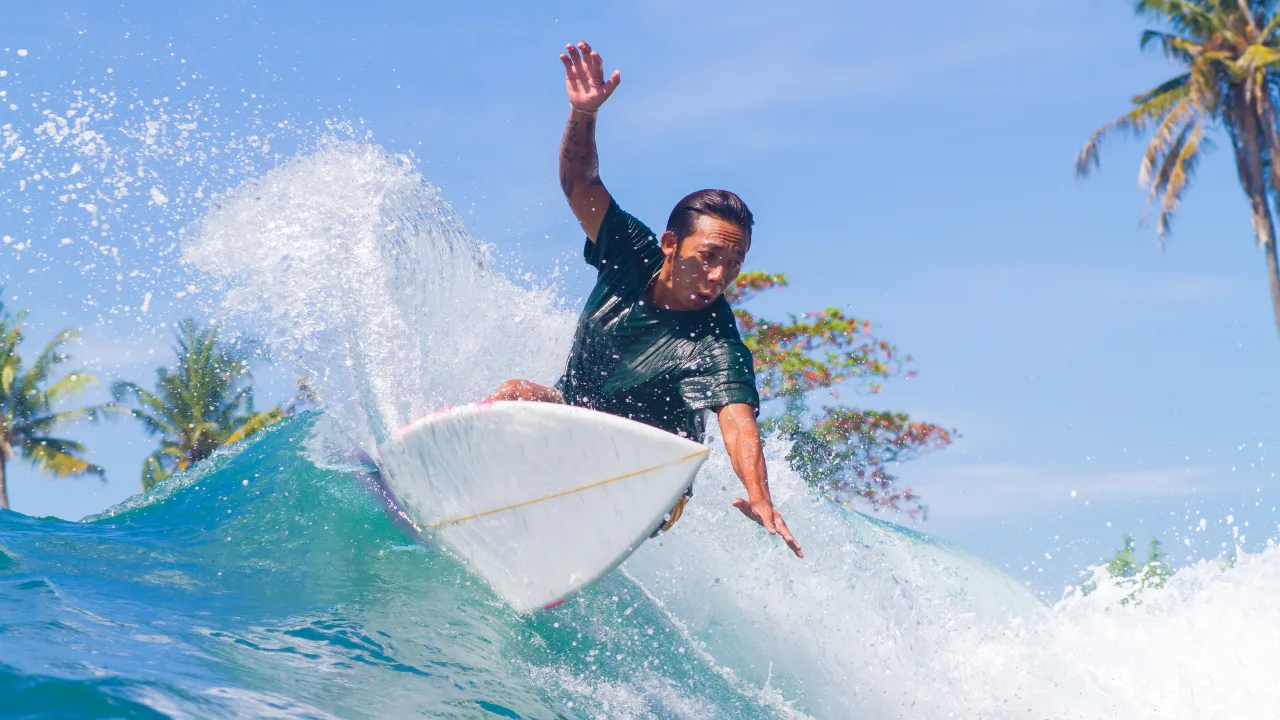
Surf lessons in Seminyak offer an accessible introduction to Bali's surf culture, with sandy beach breaks, experienced local instructors and lessons available for complete beginners. However, wave size, tides, wind and currents can change throughout the day, making professional guidance essential for a safe first experience.
This beginner guide covers Seminyak surf conditions, lesson formats, equipment, safety precautions and booking tips to help travellers choose the right surfing experience for their ability and holiday plans.
Is Seminyak Good for Beginner Surf Lessons?
Seminyak is a practical destination for beginner surfing in Bali because much of its coastline consists of sandy beach breaks rather than shallow coral reefs. On days with smaller waves, sections of the beach provide manageable white water where first-time surfers can practise paddling, standing and maintaining balance under an instructor's supervision.
However, Seminyak surf conditions are not consistently beginner-friendly. The coastline faces the Indian Ocean and receives changing swell, while tides, wind and shifting sandbanks influence where waves break. Stronger surf can also create rip currents, making some sections unsuitable for inexperienced surfers.
Travellers booking surf lessons in Seminyak should therefore choose a school that assesses daily conditions and adapts lesson times or locations when necessary. A professional instructor can identify suitable waves, explain potential hazards and select a practice area that matches the student's ability.
For a broader introduction to the coastline, the Seminyak Beach Guide explains the differences between Mesari Beach, Double Six and the wider Seminyak shoreline.

What Happens During a Beginner Surf Lesson in Seminyak?
A typical beginner surf lesson combines instruction on the beach with supervised practice in the water. Rather than starting immediately with waves, instructors introduce basic techniques and safety procedures to help students understand how to control their boards.
Ocean Safety and Beach Briefing
The lesson normally begins with an explanation of wave conditions, currents, surf etiquette and the designated practice area. Students learn how to recognise potential hazards, enter and exit the water safely, and avoid interfering with swimmers or other surfers.
This preparation is particularly important for first-time surfers who may be unfamiliar with the way ocean conditions change.
Board Positioning and Paddling
Beginners learn where to position their bodies on the surfboard and how to paddle efficiently. Correct positioning helps maintain balance and prevents the board's nose from sinking into the water.
Instructors also explain how to control the board while moving through shallow water and preparing to catch a wave.

Standing and Balance Techniques
The pop-up technique involves moving from a lying position into a standing stance. Students usually practise the movement on the sand before attempting it in the water, allowing them to become familiar with their foot placement and balance.
Once in the water, beginners typically start with broken white-water waves rather than attempting larger unbroken waves farther offshore.
Supervised Wave Practice
During the practical session, instructors help students choose suitable waves, position their boards and improve their timing. Feedback after each attempt allows beginners to correct common mistakes, including standing too early, placing their feet incorrectly or losing balance.
The objective of a first Seminyak surf lesson is to build confidence and basic technique rather than guarantee that every participant will stand successfully on the board.
Private vs Group Surf Lessons in Seminyak
Most Seminyak surf schools offer different lesson formats depending on the student's experience, learning preferences and budget. Private instruction generally provides more individual attention, while group lessons allow friends or couples to learn together.
|
Lesson Format |
Best For |
Main Advantage |
Key Consideration |
|
Private lesson |
Complete beginners, nervous learners |
Individual coaching and personalised feedback |
Usually costs more |
|
Semi-private lesson |
Couples or two friends |
Shared experience with close instructor attention |
Different abilities may affect the pace |
|
Small-group lesson |
Social learners and friends |
More affordable and interactive |
Instructor attention is shared |
|
Family lesson |
Parents and children |
Shared holiday activity |
Age and ability differences may require separate instruction |
|
Multi-day lessons |
Beginners who want to improve |
Repeated practice builds consistency |
Requires more holiday time |
When comparing surf lessons in Seminyak, instructor-to-student ratio is an important booking consideration because smaller classes can allow more individual feedback. Travellers should confirm how much personal guidance is included and whether the lesson format suits their experience and swimming confidence.
Hotel Indigo Bali Seminyak Beach offers both private and semi-private lessons through its Seminyak Surfing programme. Private lessons may suit beginners who want more focused coaching, while semi-private sessions are a practical option for couples or friends who prefer to learn together. The right format depends on each participant's confidence, learning needs and the conditions on the day.

How Long Does a Surf Lesson in Seminyak Take?
Many beginner surf lessons in Seminyak last approximately two hours, although the duration varies between operators and lesson formats. This normally includes a safety briefing, dry-land technique and supervised water practice rather than two uninterrupted hours of surfing.
The balance between instruction and practice is particularly important for beginners. Paddling, standing and recovering the board repeatedly can become physically demanding, so longer sessions do not automatically produce better results.
When booking, confirm the total lesson duration and whether it includes equipment preparation, beach instruction and breaks. Travellers interested in improving beyond the basics may benefit more from several lessons across their stay than one extended session.
Understanding Seminyak Surf Conditions
Seminyak surf conditions are influenced by several environmental factors that can change throughout the day. Understanding the basics helps beginners evaluate lesson recommendations and recognise why a surf school may suggest changing the time or location.
Swell and Wave Size
Swell determines much of the wave energy reaching Seminyak's coastline. Smaller, more manageable waves can provide suitable conditions for beginners, while larger swell creates stronger breaking waves and increases the demands of paddling and board control.
A beach section that works well for a first lesson during smaller surf may become unsuitable when wave energy increases.

Tides and Sandbanks
Tides change the water depth over Seminyak's sandy seabed, affecting how and where waves break. Sandbanks also shift over time, creating different wave shapes and currents along the shoreline.
As a result, the same beach can provide different surfing conditions in the morning and afternoon, even when the weather appears similar.
Wind Conditions
Wind affects wave shape and the smoothness of the water's surface. Strong onshore or cross-shore wind can make waves more difficult to read and reduce a beginner's ability to maintain control.
Although lighter morning winds are common during certain periods, the most suitable lesson time depends on the combined effects of wind, swell and tide.
What Is the Best Time for Surf Lessons in Seminyak?
The best time for surf lessons in Seminyak depends on daily ocean conditions rather than a fixed schedule. Morning sessions can sometimes offer lighter winds and fewer people in the water, but tide and wave size may make another time more appropriate.
Bali's southwest coast generally receives more consistent swell during the dry-season months, approximately April to October. However, stronger swell does not necessarily create better beginner conditions, and wind patterns can affect the quality of waves throughout the year.
Travellers should ask their surf instructor to recommend a suitable session time based on the current forecast and local conditions. Flexibility is especially important during the rainy season, when wind and weather can change more frequently.
Essential Surf Safety Tips for Beginners
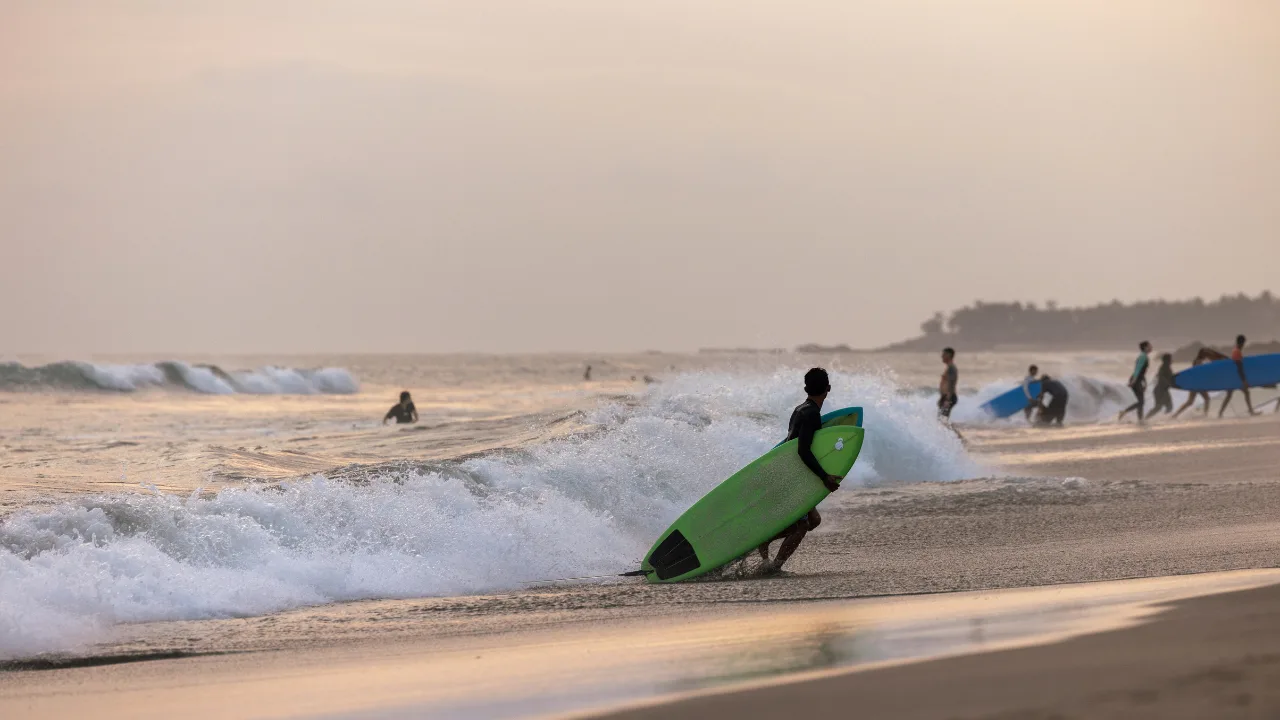
Safety should remain the priority when choosing surf lessons in Seminyak. Although the coastline offers sandy beach breaks, it is still an open-ocean environment where waves and currents can become dangerous.
Learn with a Qualified Instructor
First-time surfers should take professional lessons instead of renting a board and attempting to surf independently. An instructor can explain local hazards, identify suitable waves and supervise students during their first attempts.
Beginners should remain within the designated lesson area and follow instructions if conditions change.
Understand Rip Currents
Rip currents are concentrated flows of water moving away from shore. They can carry swimmers and surfers into deeper water more quickly than expected, particularly when waves and sandbanks create stronger water movement.
If caught in a rip current, avoid exhausting yourself by swimming directly against it. Follow established rip current safety guidance, including staying calm, moving parallel to shore when possible and signalling for help if necessary.
Keep Control of Your Surfboard
Surfboards can cause injuries when they collide with other people. Beginners should learn how to fall safely, maintain distance from nearby surfers and avoid releasing their boards towards swimmers.
The leash helps keep the board connected to the surfer, but it does not replace careful board handling.
Follow Local Beach Safety Guidance
Observe warning flags, designated swimming areas and any instructions from lifeguards or local safety personnel. Surfing and swimming zones may change depending on conditions, so visitors should not assume that every section of the beach is suitable for both activities.
If waves become too powerful or conditions deteriorate, postponing the lesson is safer than continuing simply to complete a booking.

Booking and Preparing for Surf Lessons in Seminyak
Choosing the right surf school involves more than comparing prices. Before booking surf lessons in Seminyak, travellers should consider the instructor-to-student ratio, lesson duration and how the operator assesses daily surf conditions. Private instruction generally offers more personalised feedback, while small-group lessons can be suitable for friends or couples with similar swimming confidence. A responsible operator should also explain its cancellation or rescheduling policy when waves or weather become unsuitable.
Most beginner surf schools provide suitable surfboards, leashes and rash guards, although inclusions vary. Soft-top boards are commonly recommended for first-time surfers because their additional volume provides greater stability when paddling and standing. Travellers should bring secure swimwear, water-resistant sunscreen, drinking water and a towel, while confirming whether lockers, insurance or transport are included in the booking.
Families should also discuss children's swimming ability, minimum age requirements and supervision arrangements before reserving a lesson. These details help ensure that the experience is appropriate for each participant rather than simply convenient for the group.
Enjoy Surf Lessons in Seminyak with Hotel Indigo Bali Seminyak Beach
Hotel Indigo Bali Seminyak Beach makes it convenient to combine surfing with a wider Seminyak holiday. Located in southern Seminyak near Mesari Beach, the resort places guests close to the coastline while providing dining, swimming pools, wellness facilities and neighbourhood activities for the rest of their stay.
Through its Seminyak is Surfing programme, the hotel offers two-hour guided surf lessons in private and semi-private formats, with sessions arranged through KIOSK daily between 9 AM and 3 PM. Reservations are required at least one day in advance, and non-resident guests can also participate for an additional fee. Session arrangements remain subject to availability and suitable conditions.
After surfing, guests can return to the resort for a meal, relax by the pool or book a treatment at Sava Spa. This combination makes Hotel Indigo a practical base for travellers who want to experience Seminyak's surf culture without making surfing the sole focus of their holiday.
Ready to catch your first wave in Bali? Discover Seminyak surfing and neighbourhood activities at Hotel Indigo Bali Seminyak Beach, and make surfing one of the highlights of your stay.

Frequently Asked Questions About Surf Lessons in Seminyak
Is Seminyak good for beginner surfers?
Yes. Seminyak's sandy beach breaks can suit beginners when waves and currents are manageable, particularly with professional instruction.
How much do surf lessons in Seminyak cost?
Prices vary by operator, lesson format and duration. Private lessons generally cost more than group sessions.
How long is a surf lesson in Seminyak?
Most beginner lessons last approximately two hours, including safety instruction, basic techniques and supervised water practice.
What is the best time to surf in Seminyak?
Morning can offer favourable conditions, but the best time depends on daily swell, tide and wind.
Are surf lessons in Seminyak safe for beginners?
Professional instruction helps reduce risks, but surfing is never risk-free. Beginners should follow local safety guidance and avoid unsuitable conditions.
Can children take surf lessons in Seminyak?
Yes, depending on their age, swimming ability and ocean conditions. Parents should confirm supervision and minimum age requirements.
How many surf lessons does a beginner need?
One lesson introduces the basics, while two or three sessions allow more practice with paddling, balance and wave selection.
Does Hotel Indigo Bali Seminyak Beach offer surf lessons?
Yes. The resort offers two-hour guided surfing sessions in private and semi-private formats through its Seminyak is Surfing programme, with advance reservations required.